

Jakarta, June 7, 2026 - Indonesia's rupiah has broken through the psychologically significant Rp18,000 per US dollar threshold, hitting a record low as a confluence of global pressures and domestic market anxieties continue to weigh on the currency.
As of June 5, 2026, the USD/IDR exchange rate stood at approximately Rp18,089 - 4.46% decline over the past month and roughly 7.5 -10% weaker year-to-date, making the rupiah one of Asia's worst-performing currencies in 2026.
The rupiah's slide is not the result of a single trigger, but rather a build-up of overlapping headwinds.
On the global front, ongoing conflict in the Middle East has pushed investors toward safe-haven assets, strengthening the US dollar and putting pressure on emerging market currencies across the board. Meanwhile, Indonesia's foreign exchange reserves fell by USD 2 billion in April 2026 to USD 146.2 billion the lowest level in nearly two years as Bank Indonesia stepped up market interventions to cushion the rupiah's fall.
Domestically, concerns over fiscal expansion and capital outflows have further dented investor sentiment.
In its most significant monetary policy action in over two years, Bank Indonesia raised its benchmark BI Rate by 50 basis points to 5.25% on May 20, 2026 a move that caught markets off guard, as most analysts had only expected a 25 bps increase.
It marked the central bank's first rate hike since April 2024.
Governor Perry Warjiyo was clear about the rationale:
"This rate hike is a pre-emptive measure to strengthen rupiah stabilization amid global volatility stemming from the Middle East conflict, while keeping inflation within our target range of 2.5% ±1%."
Beyond the rate hike, Bank Indonesia has also imposed limits on certain dollar purchases and continued active intervention in the foreign exchange market to manage capital outflows.
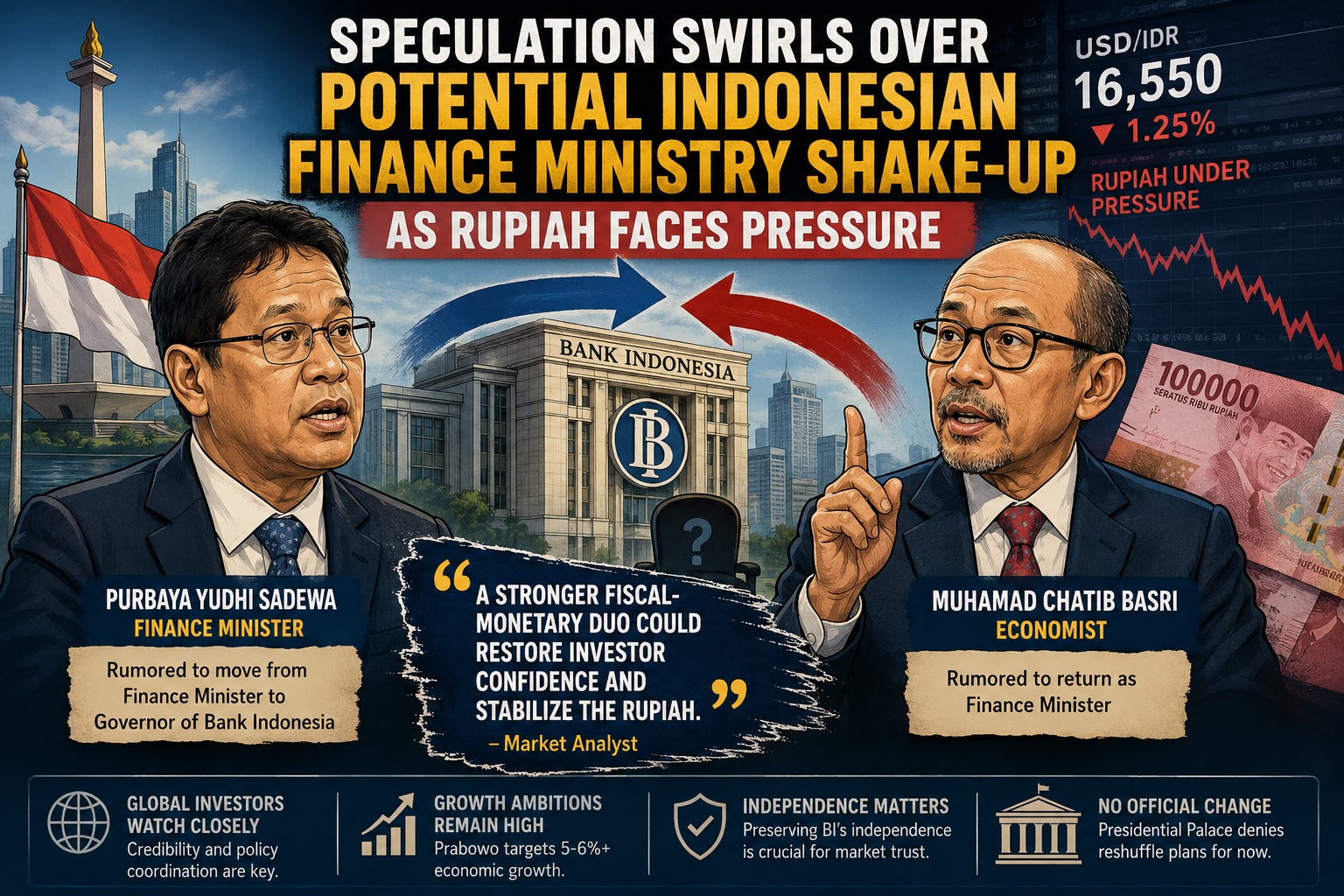
Finance Minister Purbaya Yudhi Sadewa has been vocal in pushing back against negative market narratives. Speaking before the House of Representatives' Commission XI on June 3, 2026, he firmly stated that the rupiah's weakness does not reflect the underlying strength of Indonesia's economy.
Purbaya expressed confidence that stricter enforcement of foreign exchange repatriation rules for natural resource exporters would inject much-needed dollar liquidity into the domestic market and help reverse the currency's downward trend.
"We are continuing to coordinate closely with Bank Indonesia and relevant authorities to safeguard the national financial system," he said.
He also rejected what he called the "sell Indonesia" narrative, pointing to continued inflows into the country's bond market as evidence of enduring investor confidence.
For importers, a rate above Rp18,000 translates directly into higher costs particularly for dollar-denominated commodities such as raw materials, machinery, and fuel. Businesses without adequate hedging strategies may see profit margins squeezed.
For exporters, however, a weaker rupiah can improve the price competitiveness of Indonesian goods in global markets. The net benefit will vary depending on each company's cost structure and how much of their inputs are also imported.
Bank Indonesia remains optimistic that the rupiah will recover in the second half of 2026, supported by seasonal factors and the lagged effects of the rate hike. The government under President Prabowo Subianto continues to target economic growth of 5.5-6%, anchored by investment reforms and industrial downstream development.
That said, analysts caution that risks remain elevated. Sustained high global oil prices, potential further capital outflows, and unresolved geopolitical tensions could keep pressure on the rupiah in the near term.
For now, all eyes remain on Bank Indonesia's next policy meeting and on whether the bold May hike will be enough to stabilize the currency.