


JAKARTA, Indonesia's financial markets delivered a brutal reality check on Monday as the Jakarta Composite Index (JCI/IHSG) plunged 4.52 percent its worst single day loss of 2026 closing at 5,342.14, shedding 252.63 points in a session that left investors scrambling for cover and the rupiah teetering at a historic low.
The sell off was sweeping and merciless. Of the 817 stocks that moved on the Indonesia Stock Exchange (IDX) Monday, 661 ended in the red. Only 78 managed to close higher. Total trading volume reached Rp21.3 trillion a sign that this was no quiet retreat, but a full-blown stampede for the exits.
The blue chip indices fared even worse. The LQ45 the index tracking Indonesia's 45 most liquid stocks tumbled 5.50 percent. The Jakarta Islamic Index (JII) shed 5.71 percent. The IDX30 lost 5.61 percent, and the MNC36 dropped 5.84 percent. Indonesia's two most iconic bank stocks, Bank Central Asia (BBCA) and Bank Rakyat Indonesia (BBRI), fell in tandem, dragging sentiment down further.
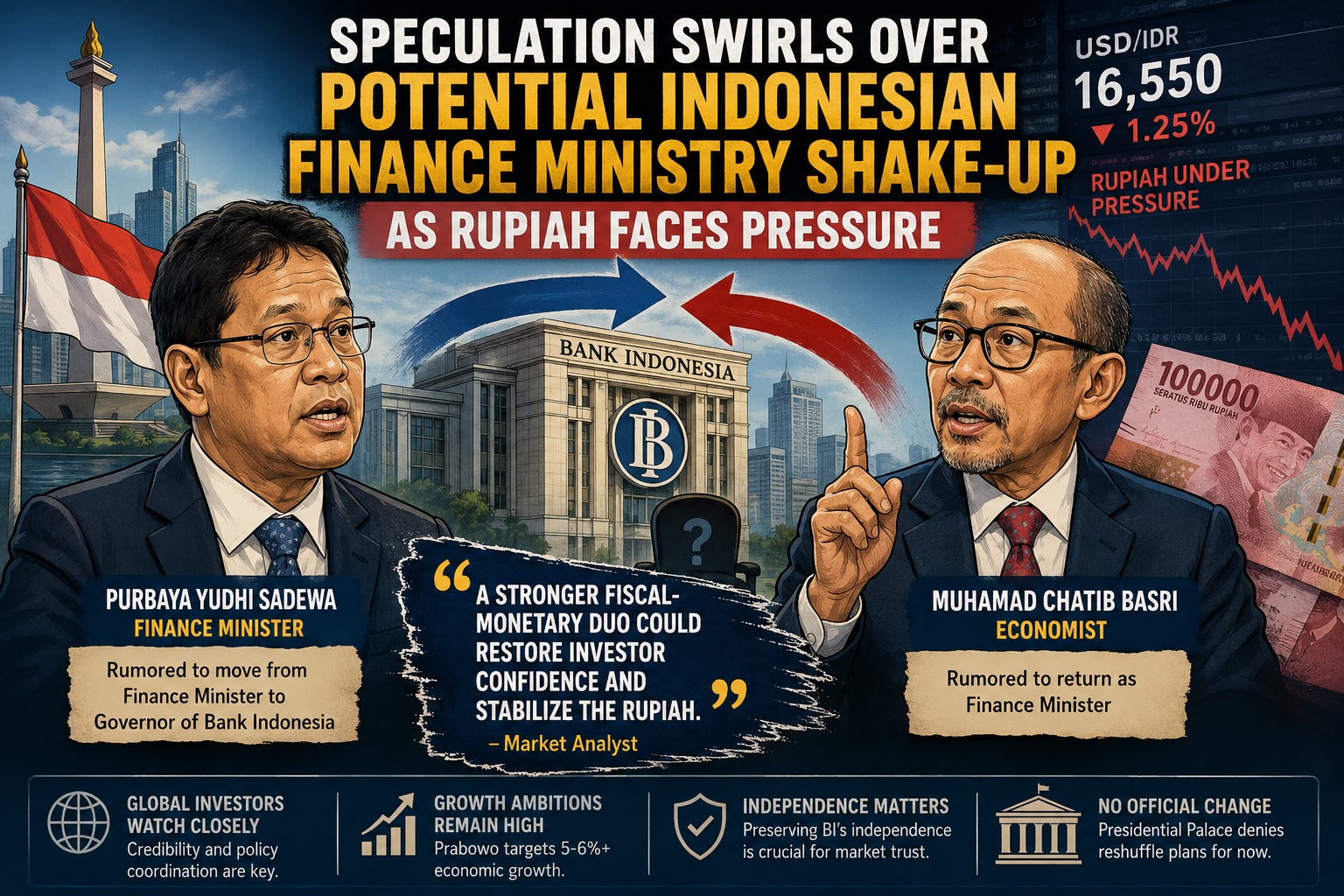
The rupiah, meanwhile, softened to Rp18,187 per US dollar, cementing its status as Asia's worst-performing currency in 2026, down more than 7 percent since January.
Foreign investors have been voting with their feet and their wallets for months. Monday's session saw net foreign outflows of Rp587.21 billion, with BBCA shares topping the list of stocks dumped by international funds. But Monday was merely the latest chapter in a longer exodus: cumulative net foreign selling on the IDX has now surpassed Rp61.8 trillion ($3.36 billion) since the start of the year.
The message from global capital markets is stark confidence in Indonesian assets is eroding fast.
Lurking behind Monday's carnage is a deadline that has rattled Indonesian markets for months. On June 18, MSCI will publish its Global Market Accessibility Review 2026, followed by the Annual Market Classification Review on June 23. The central question will Indonesia retain its coveted Emerging Market status, or be demoted to the Frontier Market tier?
A downgrade would be catastrophic. Emerging Market status means inclusion in global passive funds tracking the MSCI EM Index funds worth trillions of dollars. A reclassification to Frontier would trigger automatic, forced selling by those funds, unleashing a wave of outflows that would dwarf anything seen this year.
MSCI first raised alarm bells in January 2026, warning that Indonesia's failure to improve free float transparency and ownership monitoring could cost it its EM status. Since that warning, the JCI has shed over 12 percent, with more than $2.3 billion in foreign capital fleeing the market. With just 15 days until the verdict, Monday's plunge suggests markets are not betting on a favourable outcome.
"The market is pricing in the worst-case scenario" one Jakarta-based fund manager said.
The MSCI threat is only part of the story. Indonesia's macro fundamentals have deteriorated sharply in 2026, creating a combustible mix
A rupiah in freefall. The currency breached the psychologically critical Rp18,000 level on June 4 a record low as Indonesia's trade surplus collapsed to a near negligible $89 million in April, down from $3.3 billion the prior month. The country's Q1 2026 balance of payments deficit hit $9.1 billion, a stark signal of external stress.
Energy shock. As a net oil importer, Indonesia has been hammered by surging crude prices linked to tensions in the Middle East, inflating the import bill and squeezing the current account.
Danantara under scrutiny. Indonesia's state owned investment fund Danantara, which was meant to be a pillar of the Prabowo administration's economic vision, has seen its outlook downgraded by analysts adding another layer of uncertainty for foreign investors assessing governance risk.
Bank Indonesia tightening. In a bid to defend the rupiah, Bank Indonesia raised its benchmark rate by 50 basis points to 5.25 percent last month the first hike in two years. While the move signals vigilance, higher rates also raise borrowing costs for Indonesian companies, pressuring corporate earnings and equity valuations.
The phrase "Sell Indonesia" once a contrarian trading call has become mainstream in 2026. The country's stocks have shed more than a third of their value from recent highs, making the JCI one of the worst-performing major indices in the world this year.
Analysts point to a convergence of factors: a government perceived as interventionist, questions over central bank independence after political pressure was applied on Bank Indonesia, slowing GDP growth, and the twin deficits in trade and capital accounts. Indonesia grew a respectable 5.61 percent in Q1 2026, but markets are increasingly pricing assets not on growth, but on risk and risk is elevated.
Foreign exchange reserves, while still substantial at $144.9 billion at the end of May, have slipped from $146.2 billion the month before, signalling that Bank Indonesia is burning through reserves to slow the rupiah's slide rather than letting it find its own level.
All eyes now turn to June 18 and June 23. If MSCI delivers a reprieve maintaining Indonesia's Emerging Market classification the relief rally could be dramatic. The market is short, sentiment is crushed, and even a neutral verdict could unleash pent up buying.
But if the axe falls, the JCI could test levels not seen since 2020. Analysts estimate that a downgrade to Frontier status could trigger an additional $500 million to $1 billion in forced passive fund outflows over weeks.
The next two weeks will determine whether Monday's close at 5,342 marks the bottom or just another stop on the way down.
"The fundamentals are fixable. But markets don't wait for fixes. They wait for signals and right now, the signals are all pointing the wrong way," said one emerging-market strategist at a Singapore-based bank.