


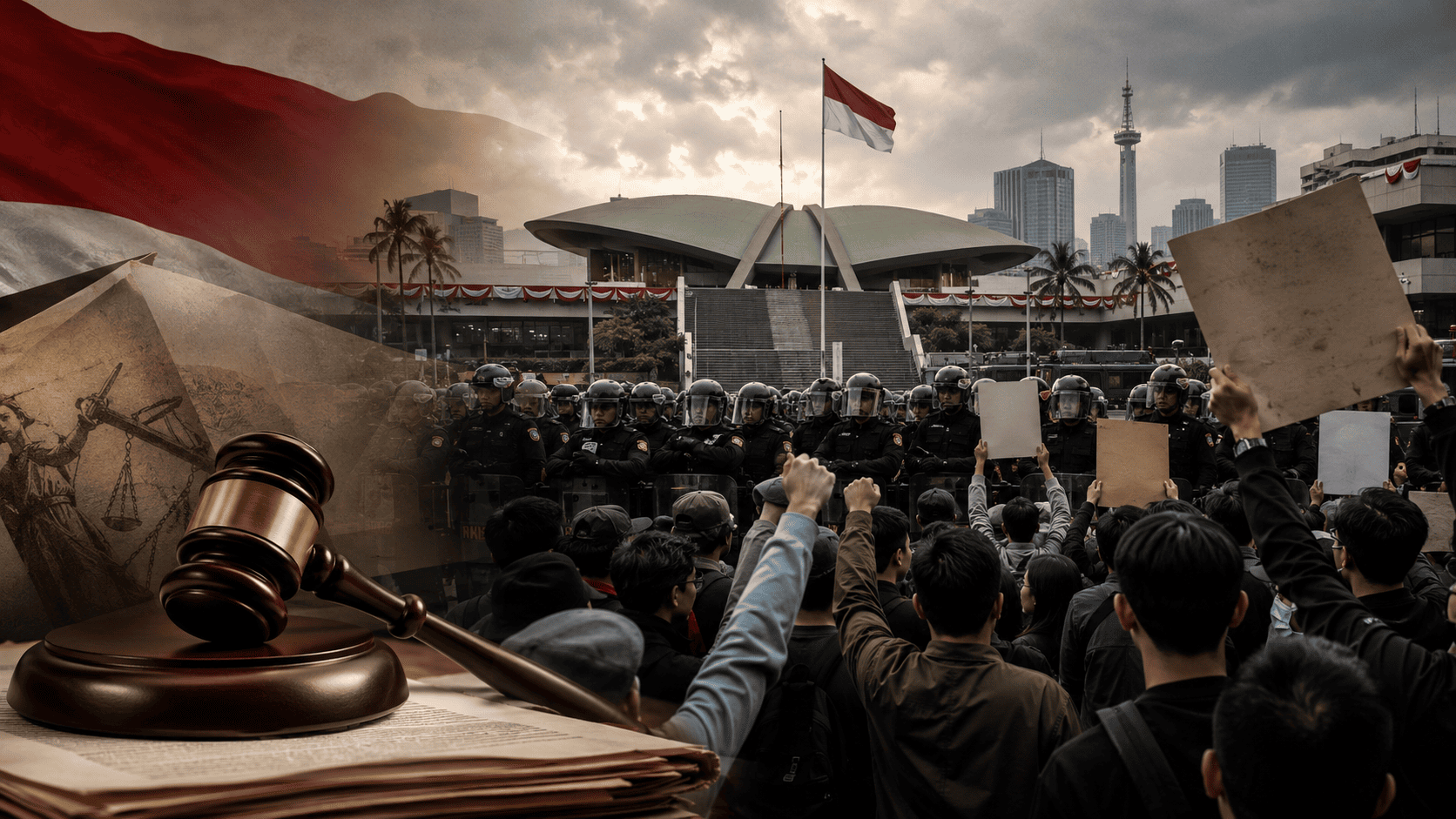
JAKARTA, Indonesia's House of Representatives (DPR RI) has approved a significant amendment to the country's national police law, marking the third revision to Law No. 2 of 2002 on the Indonesian National Police (Polri). The bill was passed unanimously during the 21st Plenary Session of the V Session Period 2025-2026, with all parliamentary factions voting in favour.
The legislation, pushed through after weeks of deliberation between the DPR's Commission III working committee and the government, is framed as a structural reform aimed at making Polri more professional, transparent, and aligned with Indonesia's newly enacted Criminal Procedure Code (KUHAP).
"This reform is designed to bring the police institution in line with modern governance values — one that serves the public with integrity, not just authority." - Government spokesperson at the plenary session
What the New Law Changes
The amendment covers eight core areas of reform:
1. Redefining Polri's Institutional Direction
The law reaffirms the police force's commitment to openness, professionalism, and quality public service moving away from a security-first identity toward a service oriented institution.
2. Technology Driven Oversight
Internal and external supervision mechanisms are to be strengthened through modern information technology systems, with a clear push for digital transparency in police operations.
3. Political Neutrality Guaranteed
The law explicitly reinforces the obligation for all Polri members to remain politically neutral, with stricter career development standards tied to merit and professionalism.
4. Community Centered Policing
Polri's core duties are reoriented toward public protection, crime prevention, and law enforcement that prioritises civilian welfare over institutional interest.
5. Civil Postings for Active Officers (Article 28A)
Perhaps the most debated provision active police officers may now hold civilian positions in government ministries and state institutions, provided the roles relate to security, public order, or law enforcement functions. Implementation will be regulated through a separate Government Regulation (PP).
Critics argue this clause risks blurring the boundary between civilian governance and military-style institutional control a concern that echoes debates from Indonesia's pre reform era.
6. Extended Retirement Age
- Non-commissioned officers (tamtama/bintara) retirement extended to 59 years
- Officers (perwira) extended to 60 years
- Four-star generals (including the Chief of Police/Kapolri) eligible for a one-year presidential extension
7. Human Rights-Based Education
Police training curricula must now formally incorporate democratic values and human rights principles, with education frameworks described as more humanist and civilian conscious.
8. Strengthening Kompolnas
The National Police Commission (Kompolnas) Indonesia's independent police oversight body receives expanded authority and a clearer mandate in supervising and advising Polri leadership.
Fast-Tracked, and Not Without Backlash
The bill moved through parliament in a matter of weeks, a pace that drew sharp criticism from civil society groups, legal academics, and human rights organisations.
The Indonesian Legal Aid Foundation (YLBHI) was among the most vocal, arguing that the process lacked meaningful public participation and that several provisions particularly Article 28A on civilian postings could concentrate institutional power without adequate checks.
Several groups have already announced plans to file a judicial review petition with the Constitutional Court (Mahkamah Konstitusi), challenging provisions they consider unconstitutional.
The government, for its part, maintains that the reform is a necessary step toward a modern, accountable police force compatible with Indonesia's evolving legal landscape.
Whether this law delivers on its promise of reform or quietly expands police reach into civilian institutions may ultimately be decided not in parliament, but in court.
What Comes Next
The law is set to be formally enacted and published through official legal channels, including the Ministry of Law and Human Rights (Kemenkumham) and the DPR's legal documentation portal (JDIH). Implementing regulations, particularly around Article 28A, are expected to follow in the coming months. International observers and domestic watchdogs alike will be watching closely.
Reported from Jakarta | Source: DPR RI Plenary Session records, official government statements